WNCBees.org Header
 Search WNCBees.org

Home About BCBC Web Forums Diseases & Pests Video Reference Library Downloads News Feeds Vendors & Suppliers Links to Other Sites WNCBees Sitemap
Next Chapter Event

Monday, May 7th
7pm, Please see home page for details
Get directions here
Latest Forum Threads
Click Here for Full Blog Listing
Blog updated 5/8/12
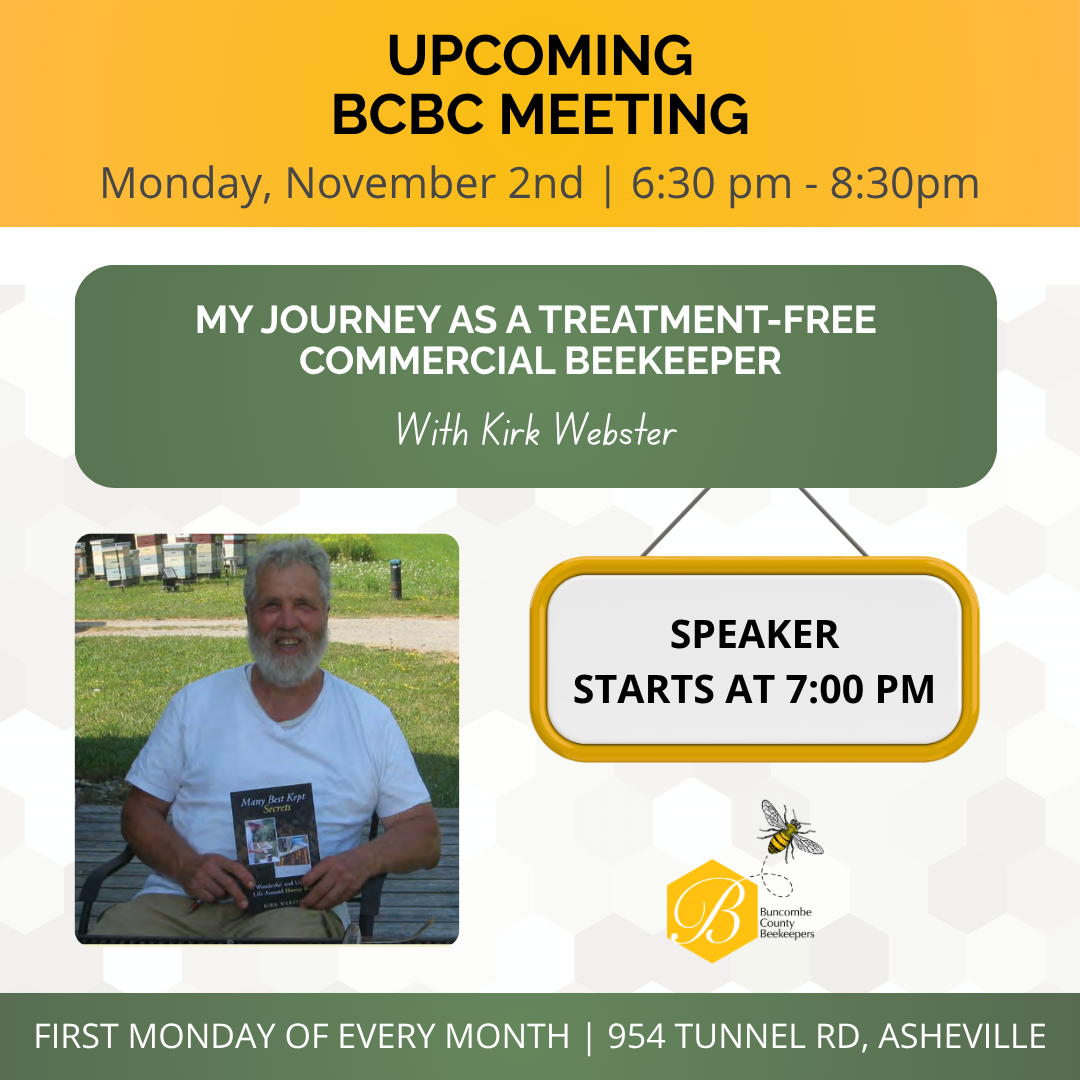
May 2012 BCBC Meeting

Join us once again at 7pm on Monday, May 7th, for the May Buncombe County Bee Chapter meeting at the Groce United Methodist Church. The meeting topic is yet undecided, but there are a lot of things to talk about this month as we, and our bees, gear up for summer.

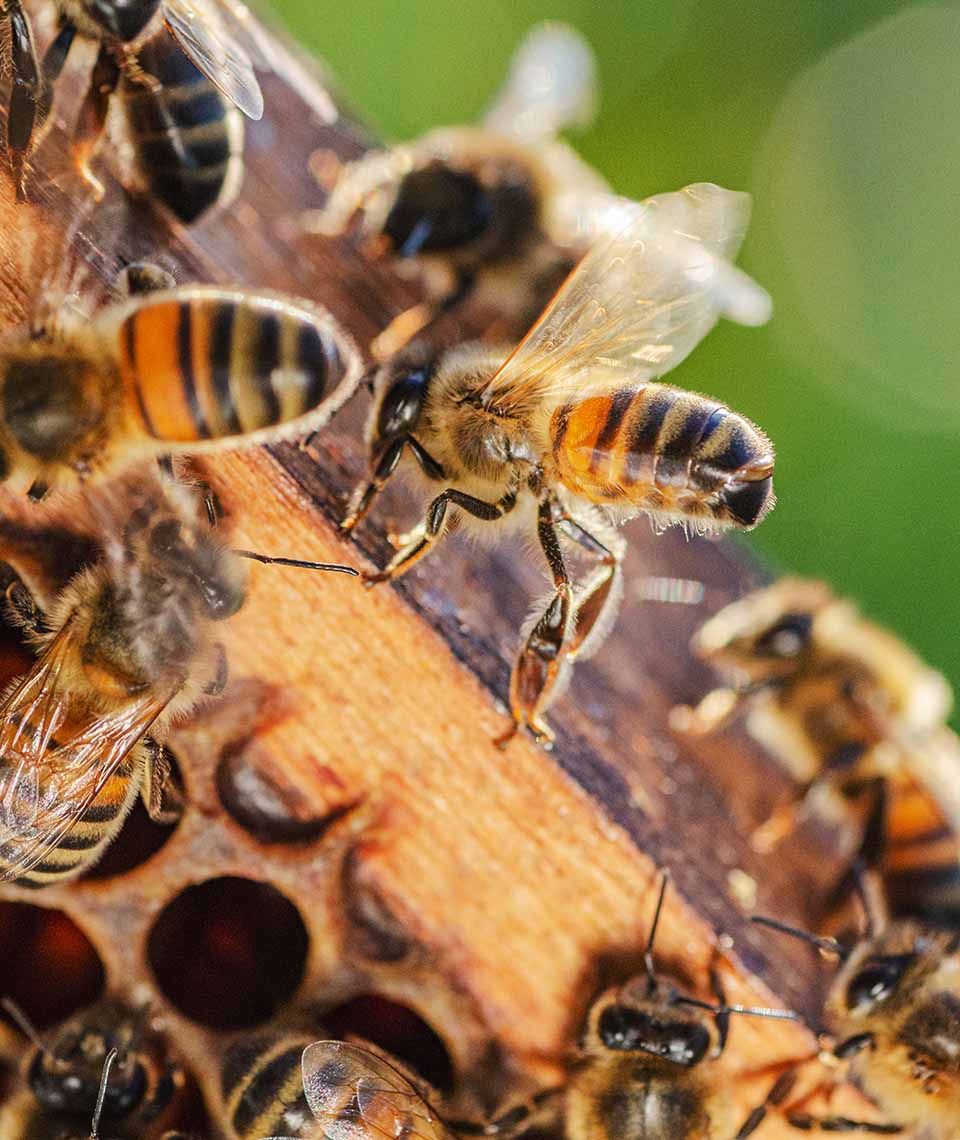
As a new beekeeper, I recently set up my first hive with the help of Marion local Ray Revis (http://www.revisrussians.com/), and got the chance to inspect it for the first time a few days ago. I was very excited to snag this picture of the queen (she's over to the left on the frame).

I hope all BCBC members and WNC beekeepers have a wonderful and productive beekeeping year! See you Monday!

7:00 pm on May 7th, 2012
at Groce United Methodist Church
at 954 Tunnel Rd in Asheville, NC.
Come early at 6:30 for informal mentoring,
conversations about your bees,
opportunity to talk to other beekeepers.

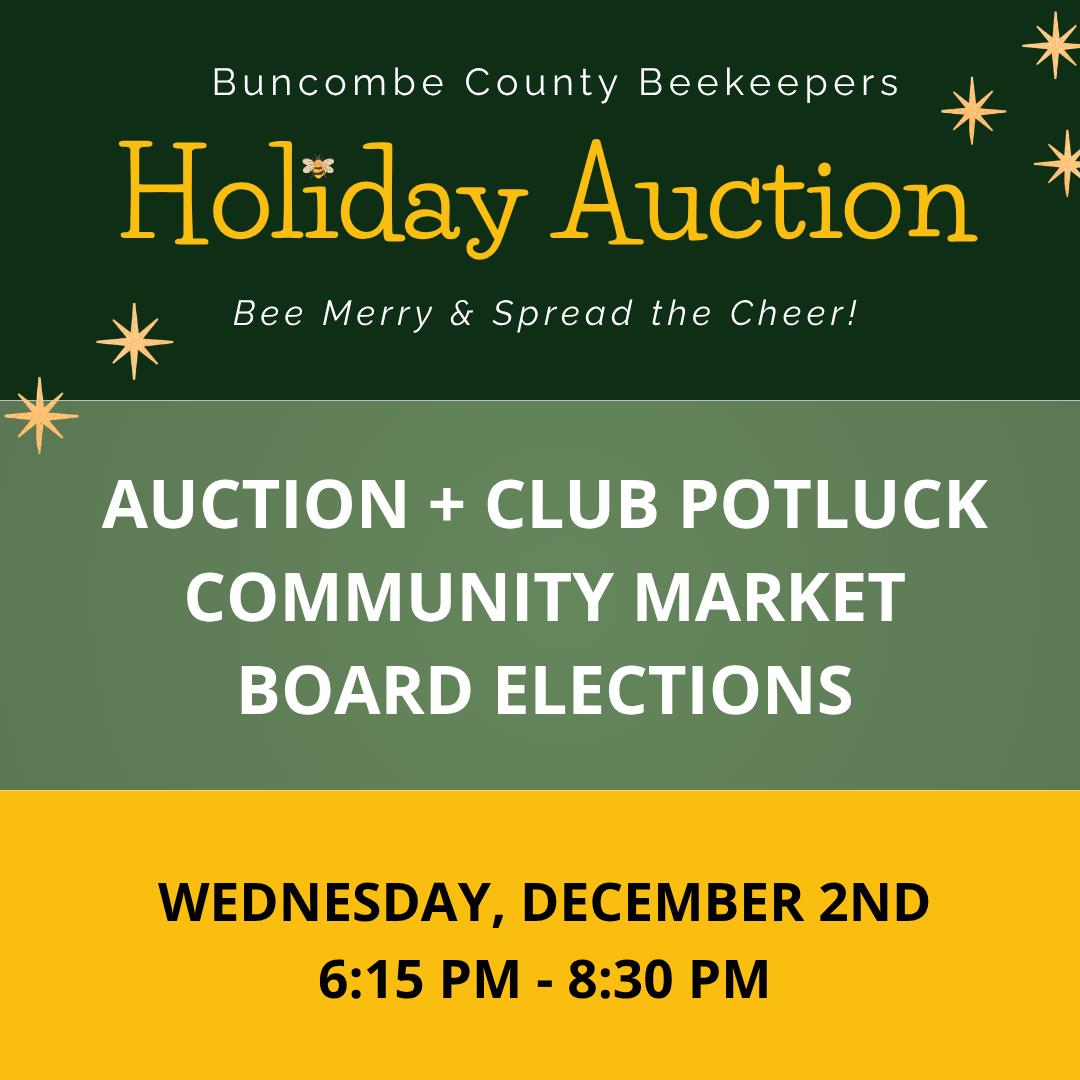
4th Annual Women Beekeepers' Gathering


Save the Date!
4th ANNUAL WOMEN BEEKEEPERS' GATHERING
Sunday July 22, 2:30 at the Hawk and Ivy in Barnardsville
 
This year in addition to the delicious joy of being in a group of all women bee keepers and lovers, we will focus on what plants, shrubs, trees, and bulbs we can grow to help our bees through the dearth times of late winter, early spring, and late summer.
Please spread the word to your women beekeeper friends. We will expand notification this year outside Buncombe County to Henderson, Madison, and Yancey counties.  More reminders will follow, and we will ask you to RSVP as the time draws closer.  

It is our hope that all of you are having a glorious spring with your sacred bee friends.

Love, Debra and Eve
Contact Debra at:  debra@holybeepress.com
Contact Eve at:  info@hawkandivy.com

Don't kill honey bee swarms!

With all the swarming activity, spring is a great time to teach friends and neighbors about bees. Though intimidating, swarms aren't really dangerous since they're just moving to a new home and highly vulnerable. Swarms have about a 20% chance for survival, and like many others the beautiful swarm pictured here didn't make it. Tragically, this one was recently destroyed by the frightened owner of the property on which it rested.

If you want bees off of your property, you should call the North Carolina Extension Office at 828-255-5522, and ask for a list of beekeepers on the "swarm list" in your area. They will ask you a series of questions to help identify the bees.  If they are honey bees, someone will be thrilled to come out to wrangle them, and it will make a great show to boot!

North Carolina Extension Office: 828-252-5522

Studies reveal dangers of neonicotinoids!

A new pair of studies conducted by Sterling University suggests that the use of neonicotinoid pesticides places bee populations in significant danger. Neonicotinoids became widely used in the 1990s, in large part because it has little effect on humans while being very effective against insects, acting as a nerve poison to prevent important messages from being processed. According to Rowan Jacobsen, these pesticides cause interruptions in the same receptor affected by Parkinson's and Alzheimer's disease in humans. The symptoms include "disorientation, short-term memory loss... tremors, spasms, and eventually paralysis and death."

What makes neonicotinoids so attractive to farmers is that they are systemic insecticides; instead of polluting the air and water, they spread through the plant itself. When insects snack on the leaves of treated plants, they die. Unfortunately, this is also true for bees, who dutifully collect pollen to bring back to their hive, essentially dosing the entire colony with poison... if they can make it that far. Part of what makes this chemical so dangerous to honeybees is that it causes such severe disorientation that affected bees are just not as likely to find their way home. In one of the studies published by Science magazine, "free-roaming honeybees were tagged with RFID chips that allowed researchers to track their movements. When dosed with a neonicotinoid, bees were more than twice as likely as non-dosed controls to die outside their hives."

Supporters of neonicotinoid use point out that farmers have strict limits placed on how much of the chemical they can use in their fields, and that the levels they use are hardly strong enough to endanger bees. But no two farmers are alike. While one farmer may be using one pesticide, his neighbor is using 2 others, and so on. When a bee can cover upwards of 15,000 acres, it is scary to consider the variety of chemicals with which they come into contact, and what the compounded effect is. A single shot of tequila may not have much effect on me, but how do I look when I follow it with a margarita, a beer, a gin and tonic, and long island iced tea? Certainly don't ask me to drive home, because I probably wouldn't make it.

"The fundamental problem isn't neonicotinoids," says James Frazier, a Penn State entomologist. "We're making ourselves the guinea pigs. I don't think that's what a rational society should be doing." It is certainly disconcerting to consider the effect of pesticides on bee populations (not to mention other stressors like poor nutrition, new diseases, and shipment). But bees are not the only pollinators, so how is it that native insects vital to the health of diverse ecosystems are faring? And what can we possibly do about it?

Check out these web pages for more information:

wired.com: Controversial Pesticide Linked to Bee Collapse

The Telegraph: Pesticides Harming Bee Populations, Researchers Suggest

BBC News: Insecticide Blamed for Bee Deaths by Stirling University Study

Also pick up Rowan Jacobsen's "Fruitless Fall: The Collapse of the Honey Bee and the Coming Agricultural Crisis"

May in the Bee Yard

Preparing for the locust, blackberry and Tulip Poplar nectar flow should have taken place at end of April:
Entrance should be enlarged by now
check brood nest, if honey bound, take out and replace with drawn comb or wax foundation to continue to give the queen a place to lay
Reverse double deep hive bodies
Equalize hives by giving some frames of brood to weaker hives
super again w/ either foundation or drawn comb in anticipation of major storage needs
ALL chemicals should be gone from the hive

Second week of May flow begins

check and add supers as month goes by, move less full peripheral super frames into the middle of the existing super
Check spacing in supers  (9 frames equally spaced instead of 10 helps the beekeeper when honey extraction occurs later)
disturb bees only minimally if at all while honey flow is on
Site Special Features
Downloads
Full-Color Posters
Wallpapers for your PC
Beekeeping Reference Library
You need to know it,, we've got it...
Bee Pests & Diseases
Image Library
Symptoms, Treatments
Beekeeping News

(5/8/12 - 12:04PM)
---- More Headlines ----

Beekeeping diary: rain and bees
Ian Douglas gets wet trying to keep his bees dry and well-fed   (5/8/12)

UDC changes clear way for beekeeping
By: Alyssa LaRenzie Forsyth County’s unified development code underwent some changes during a Thursday commission meeting.Among the moves: Beekeeping will be allowed in all zoning districts; several main roads in commission District 3 will fall under a design overlay; and septic tanks with parts on separate parcels must already be in the ground.The overlays set design standards for new ...   (5/5/12)

At Your Library: Get the buzz on beekeeping
Do you consider yourself a "locavore," a person who likes locally grown food, especially from their own backyards? If so, would you like to get more fruits and veggies from your own garden?   (5/4/12)

For Montco woman with allergy, neighbor's beekeeping is a health issue
Trish McArthur is so allergic to bee stings that when she heard two hives had joined her densely populated Plymouth Township development, she freaked out.   (4/23/12)

DA Promotes Beekeeping In Philippines
MANILA, Philippines - Department of Agriculture (DA) Secretary Proceso J. Alcala has directed the Bureau of Animal Industry (BAI) to promote apiculture or beekeeping in the Philippines in coordination with the National Apiculture Research, Training and Development Institute (NARTDI). "Apiculture, or honeybee production, is recognized in the country as an important agricultural activity providing ...   (4/28/12)


©2012 Buncombe County Beekeepers Chapter   |   Questions about this site?